
How LimbLab adds heart to the field of prosthetics
Recently, I’ve had a strong pull to explore the field of bioengineering and the many unique ways that technology can simulate humanity. Through talking to Victoria Schatzer, a resident prosthetist orthotist from Limb Lab, I was able to find out how these developments can change lives.
How do prosthetics work?
What really is a prosthetic limb? What is it made of, what does it do, and how does it work?
The first step is to create a plaster cast of the patient’s residual limb. Victoria explained that this is where the people of LimbLab must use their creative innovation and their hearts to learn what approach will be best for the client. From there, the individual parts are from a manufacturing company, and then the engineers put them together in a way that will create the most natural human-like movement for the client.
These are some ways they can do it:
- Hydraulic Resistance: This is when bioengineers use cylinders of fluid to recreate the resistance that human joints have through tendons. So, think about when your leg steps down onto the ground, the muscles and fibers that surround your joints tighten and loosen in order to allow you to move comfortably. In hydraulic resistance technology, small cylinders create a tight space where the fluid can leak through slowly – imagine pushing water out of a syringe vs. pushing out air. The water will be harder to push because it’s harder to compress. This concept is reimagined in prosthetic technology to create a robotic ‘tendon’.
- Microprocessors: This is essentially a mini computer inside the prosthetic that uses binary code (0110101…) to record information such as the pressure against the bottom of the foot and timing of someone’s stride, and then passes that data to micro-motors that make it easier for the user to walk. This technology allows the user to not need to consciously think about things like swinging their prosthetic or bearing weight, and they are then able to walk more naturally.
- Electrodes: These are electrodes
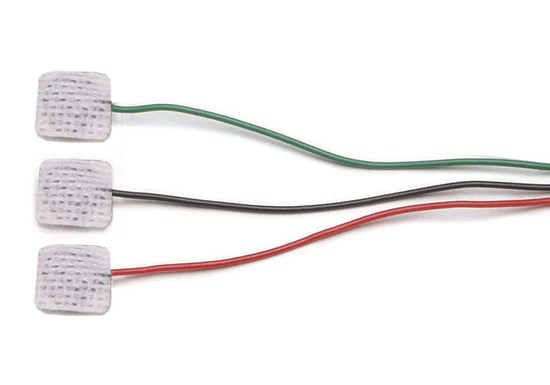
These little devices stick to your skin and sense electronic pulses based on your muscle movement. Then, they set off motors in the prosthetic that mimics human movement. So, for example, if you tell someone with no hand to “open your hand”, the sensors will track that movement and train itself to automatically open the fingers of the prosthetic when those electronic signals are repeated.
In essence, all these technologies are ways that biomechanics can reimagine human movement: the hydraulic resistance method reminds me of tendons and muscles tightening up, microprocessors remind me of a brain, and electrodes remind me of muscle twitches.
Limb Lab assesses each individual client and uses these innovative technologies to create a prosthetic that will make them most comfortable and fit to return to their usual activities, whether it be biking, knitting, or just feeling able to move freely again.
What parts do not replicate human embodiment?
Although most of this technology is created to be as human-like as possible, there are undeniably elements that are not able to simulate a human limb – and there are also some parts of our human bodies that are not necessary. This, to me, showed the ways in which deconstructing and attempting to simulate an element of the human body – or any part of the natural world – will always result in us learning more about the original thing. This concept of simulation as a means to understanding is one I will revisit again and again, as I think it can be used as a framework for speculation about our brain, the economy, and more.
Victoria said that one way she can make her patients love their prosthetic is through aesthetics, which opens a lot of doors in terms of creativity and comfort. She said that people can make their limb look however they please. So, for example, if someone would like their prosthetic to be covered in silicone and colored to look like a real human part, that would be possible. If someone wanted their prosthetic to be a fun color, or even wanted to print a photo of their dog onto the piece, that would also be totally possible.
This concept of approachability vs creativity in order to make the client most comfortable was interesting to me because it shows the many different ways that innovative technology can be used to aid people. Sometimes, its ability to simulate is its superpower, but sometimes its ability to create something completely new in a place where we least expect it is more valuable.
Victoria’s Work
Having the opportunity to talk to a member of the Limb Lab team was extremely enriching because it shows the ways in which technology can connect people. Victoria went to Ecuador and Guatemala with the Range of Motion Project to bring her practice to an underserved community. She told a story about one of her patients who had a family farm for years and was only able to keep their livelihood afloat because he was granted his movement back through a leg prosthetic. She explained how in underserved communities globally, the client’s gratefulness goes beyond their own life and into the lives of their friends and family because their culture is much more community oriented.
She is currently working on a project to enable people to better detect pressures within a socket (the place where the residual limb sits) for those with sensation loss. About 80% of people who need prosthetic limbs are those who have complications with diabetes, which can narrow blood vessels and cause nerve damage. If they lose their limb from diabetes, they won’t have enough sensation to assess whether the prosthetic is a comfortable fit. Victoria is working on a device to detect pressures within the socket to help this large population of her clients.
Keep an eye out for Limb Lab and their developing technologies. And a big thank you to Victoria Schatzer for filling me in on the company and prosthetic engineering in general!
 What's Next? Science and Technology
Leave a comment